E-Beam Lithography Anti-Charging Agents

Discharge

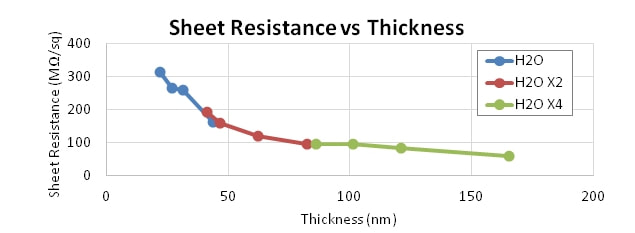
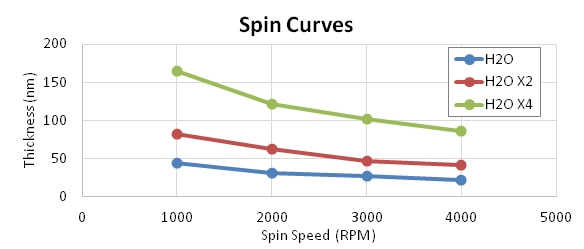
DisCharge is an anti-charging agent used in electron-beam lithography for preventing charge accumulation on electrically insulated substrates. DisCharge is water based and easily removed with water or IPA. DisCharge H2O is available in standard (1X), 2X and 4X formulations with film thickness doubling and sheet decreasing proportionally to the incremental increase in concentration.
Electron Beam Lithography Charge? DisChem’s DisCharge is Here to Help!

Do you struggle with charge accumulation that disrupts the accuracy of your beam? At DisChem, we understand these frustrations and are here to help. Our advanced solutions tackle these issues head-on, ensuring you achieve precision and efficiency in your lithography projects.

Meet DisCharge: Your Solution to Charge Accumulation

One of our standout products is DisCharge, a spin-on anti-charging agent specifically designed for electron beam lithography. This innovative solution helps reduce charge accumulation on insulating substrates, which is a common problem in EBL processes. By addressing this issue, DisCharge ensures better positional accuracy and improved lithographic outcomes.

Why Use an E Beam Lithography Charge Dissipation Agent?

Have you ever noticed that your lithographic patterns suffer from poor fidelity or unexpected distortions? This is often due to charge accumulation on insulating substrates like fused silica, glass slides, and PDMS. Our E Beam Lithography Charge Dissipation Agent, DisCharge, is designed to mitigate these problems. It works seamlessly with positive resists such as PMMA, ZEP520A, CSAR 62, and mr-PosEBR, ensuring that charge accumulation does not compromise your work.

The Benefits of Using DisCharge

  • Enhanced Positional Accuracy : By reducing charge accumulation, DisCharge improves the precision of your electron beam.
  • Improved Pattern Fidelity :Achieve the exact patterns you design, free from distortions caused by charge buildup.
  • Versatile Application :DisCharge is effective on various substrates and compatible with multiple resist types.

Evidence of Effectiveness

The effectiveness of DisCharge as an EBL Charge Dissipation Agent is backed by solid evidence. In experiments conducted with different resists and substrates, DisCharge consistently prevented charge accumulation, resulting in better pattern fidelity and substrate integrity. Whether working with PMMA, ZEP520A, or CSAR 62, DisCharge ensures that your electron beam lithography processes deliver the high-quality results you need.

Real-World Results

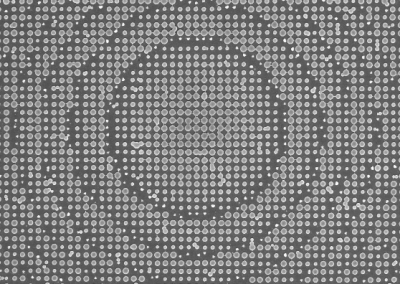
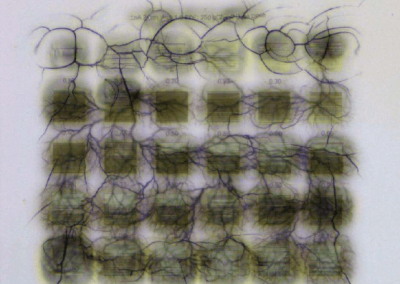
  • 300 nm PMMA 950 A4 on PDMS : Without DisCharge, charge accumulation caused cracks in the PDMS. With DisCharge, no charge accumulation was observed, and the structure appeared as expected.
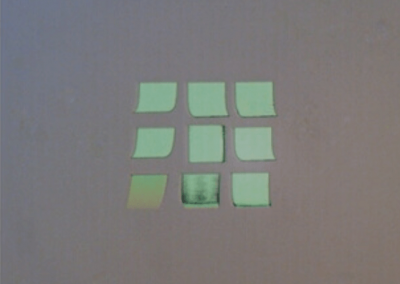
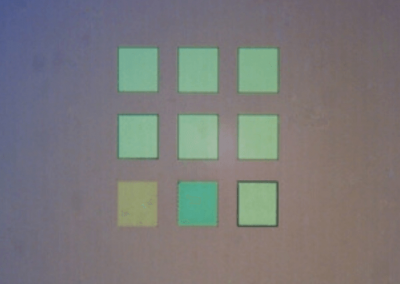
  • 300 nm mr-PosEBR on Glass Slide :Without DisCharge, poor shape fidelity was evident. With DisCharge, the patterns were accurate and as expected.
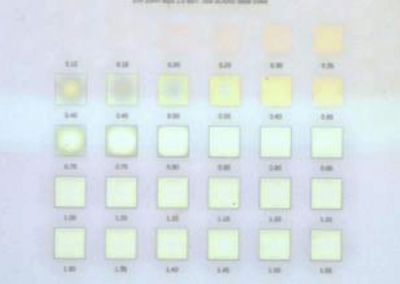
  • 200 nm ZEP520A on Glass Slide :DisCharge prevented charge accumulation, ensuring the desired pattern fidelity and resist crosslinking at high doses.

EBL Charge Dissipation

DisCharge has been extensively tested and proven to be effective at the Singh Center for Nanotechnology Quattrone Nanofabrication Facility. Researchers Gerald G. Lopez, Ph.D., and Glen de Villafranca have documented the remarkable performance of DisCharge, in reducing charge accumulation during EBL processes. Their studies show significant improvements in pattern accuracy and substrate integrity when using DisCharge.

Evidence of Effectiveness

The effectiveness of DisCharge as an EBL Charge Dissipation Agent is backed by solid evidence. In experiments conducted with different resists and substrates, DisCharge consistently prevented charge accumulation, resulting in better pattern fidelity and substrate integrity. Whether working with PMMA, ZEP520A, or CSAR 62, DisCharge ensures that your electron beam lithography processes deliver the high-quality results you need.

How Does DisCharge Work?

  • Application : Spin coat DisCharge onto your substrate as per the resist protocol. No pre-bake is required.
  • Exposure :Mount the sample in your EBL tool and ensure the grounding clip is properly touching the sample surface. Proceed with your pattern exposure.
  • Removal :After exposure, DisCharge can be easily removed using various methods such as spin rinse, sink rinse, or solvent rinse.

DisCharge: Spin-On Anti-Charging Agent for Electron Beam Lithography

Our DisCharge product has been thoroughly tested at the Singh Center for Nanotechnology, where it demonstrated its ability to reduce charge accumulation on insulating substrates. This reduction in charge buildup leads to improved positional accuracy of the electron beam and better overall lithographic performance. DisCharge has been shown to be effective on substrates like fused silica, glass slides, and PDMS, making it a versatile solution for a wide range of applications.

Still Need Help!

At DisChem, we are dedicated to providing solutions that enhance your lithography processes. DisCharge, our advanced Electron Beam Lithography Charge dissipation agent, addresses the critical issue of charge accumulation, ensuring better pattern accuracy and substrate integrity. With DisCharge, you can achieve the precision and efficiency your projects demand.

Ready to improve your lithography results? Contact us today to learn more about DisCharge and our other innovative products. Let’s tackle your lithography challenges together.

Frequently Asked Questions

1. What problem do anti-charging agents solve in e-beam lithography?

Anti-charging agents prevent static charge buildup on insulating substrates during electron beam exposure. Without charge dissipation, accumulated electrons can distort the beam path, leading to pattern displacement, reduced resolution, and inconsistent feature sizes in high-precision e-beam lithography processes.

Insulating materials such as glass, fused silica, and polymers cannot dissipate excess electrons during exposure. This trapped charge deflects the electron beam, causing image drift, pattern distortion, and loss of critical dimension control during electron beam lithography.

DisCharge is DisChem’s proprietary anti-charging agent designed to form a thin conductive layer on substrates. This layer safely dissipates excess electrons during exposure, helping maintain beam stability, accurate pattern placement, and improved lithography results on non-conductive surfaces.

Unlike metal coatings, DisCharge is water based and easily removable. It integrates into standard spin coating workflows, does not require vacuum deposition, and can be rinsed away after exposure without damaging the resist or underlying substrate.

DisCharge is compatible with commonly used electron beam resists including PMMA, ZEP, CSAR, and other positive and negative tone resists. Proper application ensures charge dissipation without interfering with resist adhesion, exposure sensitivity, or development performance.

DisCharge is applied by spin coating over the resist or substrate following recommended protocols. After e-beam exposure, it can be easily removed using deionized water or isopropyl alcohol prior to resist development.

When used correctly, DisCharge does not interfere with resist development or pattern formation. Instead, it improves feature quality by minimizing beam deflection, resulting in sharper edges, better alignment accuracy, and improved pattern fidelity at nanoscale dimensions.

DisChem offers DisCharge in multiple concentrations to accommodate different process requirements. Higher concentrations provide increased conductivity for challenging substrates, while lower concentrations support thinner films for applications requiring minimal coating thickness.

Anti-charging agents are especially beneficial for insulating substrates such as glass, fused silica, quartz, polymers, and oxides. These materials are prone to charge accumulation during e-beam exposure and often require additional charge dissipation for reliable patterning.

By dissipating excess electrons, DisCharge stabilizes the electron beam during exposure. This reduces pattern drift and placement errors, allowing the beam to follow its intended path and produce accurate, repeatable nanoscale features across the substrate.

Yes. Reducing charge-induced defects leads to fewer failed exposures and reworks. Improved beam stability and pattern fidelity contribute to higher yield, better repeatability, and more consistent results in both research and production lithography environments.

DisCharge is designed for flexibility and reliability, making it suitable for academic research labs, prototyping facilities, and industrial manufacturing environments where consistent e-beam lithography performance is required across multiple runs and applications.

No. DisCharge integrates seamlessly into existing spin coating and rinse steps. It does not require additional equipment or specialized removal processes, making it a simple and effective solution for managing charge accumulation in e-beam lithography.

DisCharge offers easier removal, cleaner processing, and strong compatibility with common resists. Unlike some conductive polymers, it minimizes residue risk while providing effective charge dissipation without introducing additional contamination or processing complications.

Yes. DisCharge is formulated to be gentle on sensitive substrates. Its water-based chemistry and mild removal process reduce the risk of surface damage, making it suitable for fragile materials and precision nanofabrication workflows.

Are You Looking to Buy Chemicals?

Inquire about our exciting new products and well priced commodities.