Can HSQ Resist Meet Today’s High-Resolution EBL Needs?
Sep 17, 2026
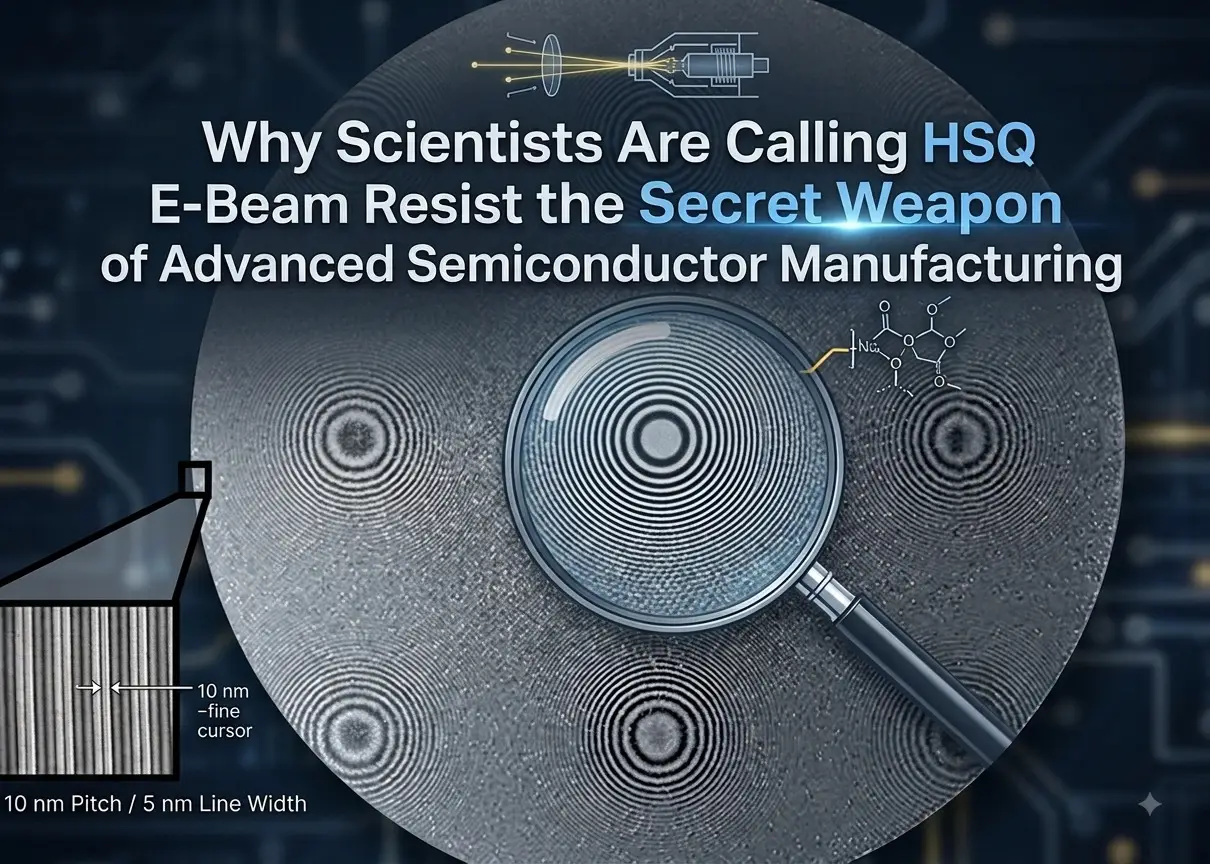
An HSQ hydrogen silsesquioxane resist is an inorganic liquid coating that converts into dense silicon dioxide glass under an electron beam, making hydrogen silsesquioxane fully capable of meeting modern sub-10-nanometer lithography needs. By transforming directly into rigid silica glass, it provides the structural support needed to prevent feature collapse, reduce line-edge roughness, and maintain crisp vertical sidewalls during semiconductor fabrication.
As electronic and photonic devices shrink toward atomic dimensions, nanofabrication engineers require printing materials that can form lines smaller than 10 nanometers without bending or swelling. Traditional organic polymer resists often soften, swell, or collapse during wet development when features are placed close together. Inorganic HSQ solves this physical limitation because its cage-like molecular structure crosslinks into rigid silica glass when struck by electron beam energy.
This direct inorganic transformation enables research teams to print dense, high-aspect-ratio patterns across complex device layouts. Furthermore, the resulting silicon dioxide glass layer offers excellent etch resistance against harsh plasma gases during pattern transfer steps. Public guidelines published by the National Nanotechnology Coordinated Infrastructure (NNCI) confirm that inorganic resists like HSQ reliably preserve pattern fidelity down to sub-10 nanometer scales. DisChem supplies pure H-SiQ resist formulations pre-mixed in MIBK solvent, providing cleanrooms with ready-to-use solutions for consistent film thickness and repeatable exposure results.
While HSQ offers exceptional resolution, raw hydrogen silsesquioxane requires careful handling to prevent early gelation when exposed to heat or moisture. Uncontrolled aging can lead to micro-clumps, inconsistent spin coating, and poor substrate adhesion. DisChem resolves these practical challenges by delivering stable H-SiQ formulations that maintain a reliable six-to-nine-month shelf life when stored under dark refrigeration between 2 and 8 degrees Celsius.
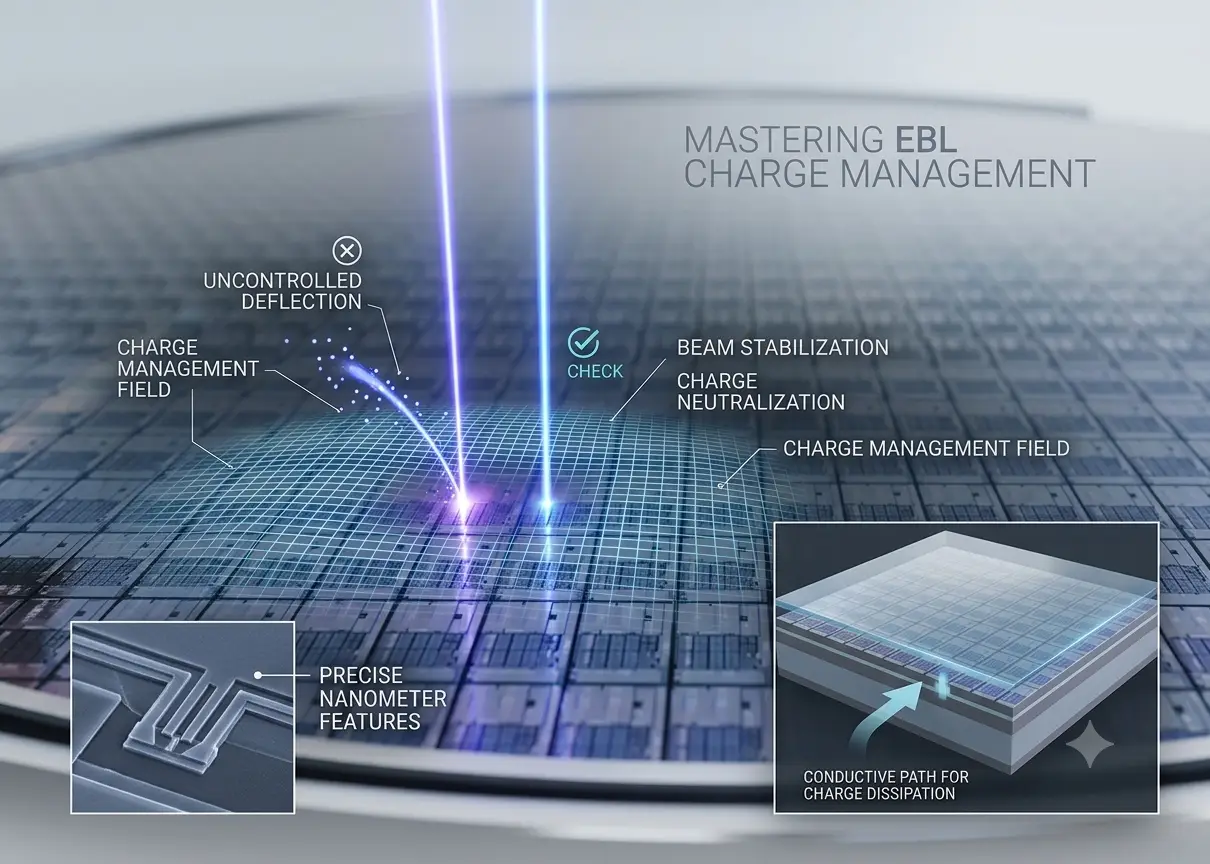
To ensure patterns transfer smoothly onto demanding substrates like quartz, sapphire, or silicon carbide, process engineers can combine HSQ with DisChem surface chemistry solutions. Applying SurPass surface modification chemistry before spin coating strengthens chemical bonding at the substrate interface, preventing delicate nanoscale lines from lifting or peeling during aggressive developer agitation and water rinsing. For non-conductive substrates like quartz, pairing HSQ with DisCharge H2O anti-static top coating safely drains accumulated surface electrons to ground. Additional research resources hosted by the Yale Institute for Nanoscience highlight how proper surface priming and charge control prevent pattern distortion and improve total device yield.
Integrating HSQ into advanced electron beam lithography workflows simplifies processing by eliminating standard photoresist removal routines. In conventional chip manufacturing, engineers must apply sacrificial resists, transfer patterns into hard masks, and then strip the residual polymer using harsh chemical strippers. Because exposed HSQ transforms directly into permanent silica glass, it can remain on the substrate as a functional dielectric insulator or protective layer.
Skipping the resist removal step reduces chemical waste, lowers defect risks, and speeds up daily device fabrication. Key advantages of adding DisChem H-SiQ resist into high-resolution workflows include:
Inorganic HSQ resist continues to set the standard for high-resolution e-beam lithography down to sub-10 nanometer dimensions. Its unique ability to transform directly into durable silica glass provides high etch resistance, minimal line roughness, and streamlined manufacturing steps. By combining stable H-SiQ resist with DisChem surface primers and anti-static top coatings, cleanroom facilities can achieve reliable pattern fidelity and high production yields on every fabrication run.
An HSQ resist turns into hard quartz-like glass under an electron beam, unlike organic polymer resists that swell or bend. This inorganic conversion provides superior etch resistance, cleaner line edges, and the structural strength needed to form dense patterns smaller than 10 nanometers without feature collapse during development.
To keep hydrogen silsesquioxane resist pure and prevent gel formation, store liquid formulations under dark refrigeration between 2 and 8 degrees Celsius. Keeping sealed bottles away from heat, light, and moist air prevents early aging and extends usable shelf life up to nine months for consistent coating results.
Surface modification primers build a chemical bridge between the wafer substrate and the liquid resist layer. Applying primer before spin coating increases surface adhesion, which prevents sub-10 nanometer glass lines from lifting, peeling, or sliding off smooth wafer surfaces during aggressive developer agitation and rinsing steps.
Exposed HSQ transforms directly into dense silicon dioxide glass during electron beam writing, meaning it does not need to be stripped. Engineers frequently leave cured HSQ patterns on samples permanently as working dielectric insulation, optical waveguides, or protective surface layers in finished microchip and sensor devices.
Alkaline developer solutions like TMAH or sodium hydroxide are widely used for developing exposed HSQ patterns. Adding inorganic salts to developer solutions creates high contrast between exposed and unexposed areas, helping cleanroom teams define sharp, vertical sub-10 nanometer line features with minimal background residue.
DisChem Inc. manufactures specialized chemical solutions designed to improve precision and yield across semiconductor and nanofabrication workflows. Visit discheminc.com to learn more about our complete product line.