How SurPass Photoresist Adhesion Promoter Improves Pattern Stability in Advanced Microlithography
When it involves making modern microchips, there is really no room for mistakes! As we try to make features smaller and smaller, keeping everything stable on the wafer is a huge deal for engineering teams. Making sure the photoresist actually stays stuck to the surface isn’t just a nice extra. It is a total requirement if you want your devices to actually work! That is why choosing a high-performance SurPass photoresist adhesion promoter is such a vital step when you are getting things ready.
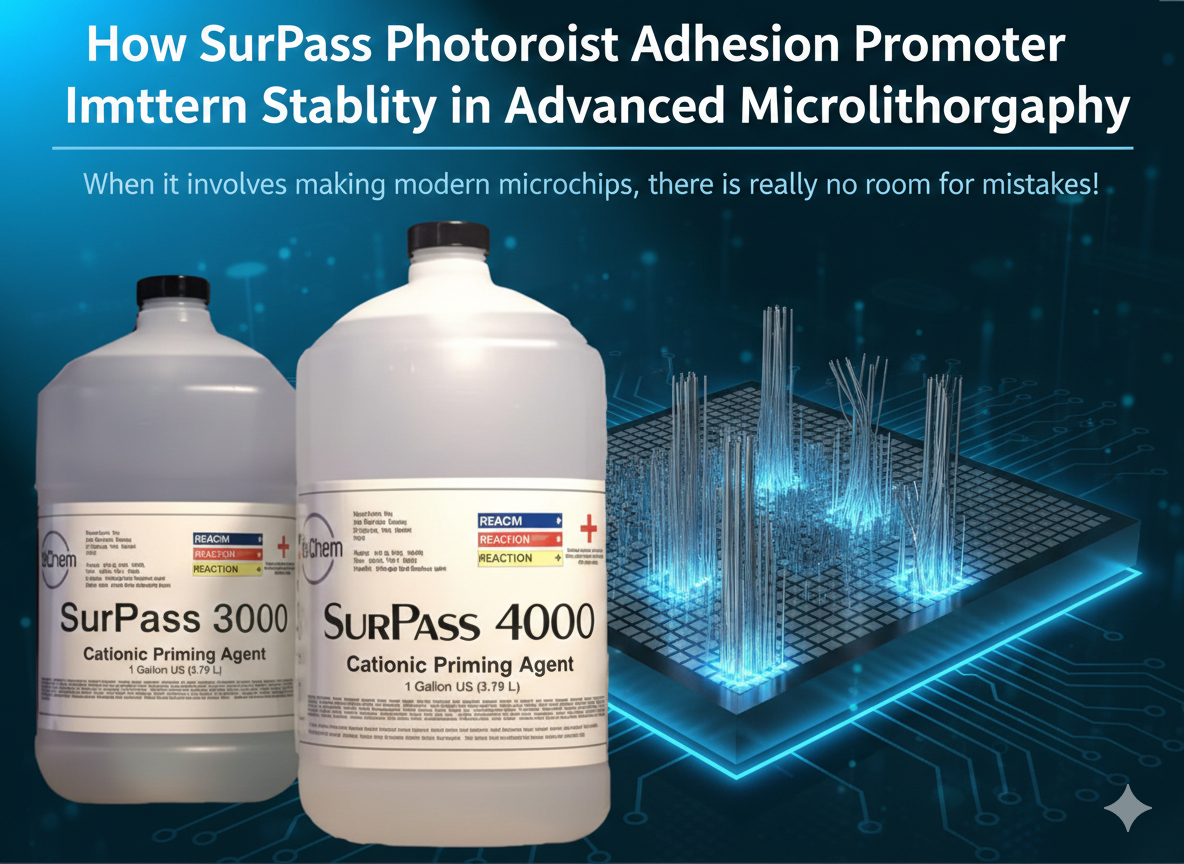
As chip parts shrink down to just a few nanometers, they start to look like tall, skinny towers. These tiny lines are super fragile, especially when they are being rinsed and dried at the very end. The water or liquid drying off can pull on these narrow gaps with a lot of force! If the bond at the bottom isn’t strong enough, those little structures will just tip over, stick together, or peel right off the wafer.
This usually happens because the surface energy doesn’t match up quite right, which stops the resist from getting a good grip. Different surfaces like nitride or metal oxides all act differently. Some are slippery and some are rough. To get through these high stakes jobs, you need a surface treatment that can handle all sorts of materials without messing up the chemistry of the rest of the stack.
Building a Foundation That Lasts
To deal with all that physical stress, using smart surface chemistry has become the go to move for shops that want to avoid wasting time and money. The old ways of doing things often use gas, which can be hard to control and doesn’t always cover bumpy surfaces evenly. On the other hand, a specialized water based promoter creates a smooth, high energy surface across the whole wafer. This helps the resist spread out and stick with way more strength, so even the most delicate parts stay standing during the etching process!
The science behind these modern solutions is all about building a bridge between the wafer and the resist. By tweaking the surface at a tiny level, we can build a foundation that handles the spinning and developing without breaking a sweat. This is extra important for things like advanced packaging where the features are a lot taller than usual.
Why This is Great for High Resolution Work
Technology keeps changing, and you need more than just a quick fix for sticking problems. You need something that works perfectly with the machines you already have. Modern factory lines are fast and automatic, so any new chemical has to play nice with the nozzles and the drains. Focusing on how things stick at the molecular level helps labs get those sharp, clean edges they need for next generation tech without causing new bugs or glitches.
When the base of the stack is solid, engineers can feel much better about trying out more complex and crowded designs. It also gives everyone a bit more breathing room. When you don’t have to worry about parts peeling off, you have more freedom to adjust the settings on your tools. This makes the whole process less sensitive to tiny changes in the room or the equipment, which leads to a much smoother workday.
Better Yields and Faster Results
At the end of the day, making sure as many chips as possible work is what matters most. Every wafer that has to be fixed or thrown away is a waste of time and expensive supplies. Problems with things not sticking can be sneaky, showing up as random defects that are hard to track down. By using a super reliable method to prep the surface, you can get rid of one of the biggest headaches in the fab. This proactive move keeps your expensive lithography process safe and sound.
Plus, the industry is thinking more about the environment these days. Moving away from harsh chemicals and using water based promoters is great for sustainability goals and it still does a fantastic job. It is that mix of being fast, safe, and effective that makes for a great modern solution. By integrating a SurPass photoresist adhesion promoter into the workflow, facilities can hit their yield targets more consistently.
Handling Complicated Layers
Today chips are built like a giant, complicated sandwich with all sorts of different materials. Each of these layers reacts in its own way to cleaning and prepping. You need an adhesion strategy that works across all of them to keep everything lined up and solid. Whether you are working with thick films or super tiny patterns, the chemical bond is the most important part of the whole project.
Adding these promoters into the cleaning cycle makes the whole flow much easier. By treating the surface right before you put the resist on, you keep it clean and ready to go. This ensures the surface is at its best right when you need it, which leads to a better coating and a much stronger bond.
The Fine Details of Surface Science
Getting the physics right is a must for anyone running a line. When we talk about surface energy, we are really just looking at the forces that decide how well a liquid will wet the surface and stay there. A lot of the old primers only fix half the problem. A total solution works by making the surface much more friendly to the chemicals used in modern resists. This control is what lets you build tall pillars and deep trenches without worrying about them falling apart later.
These promoters also help stop things like tiny bubbles or uneven coatings from happening. A well prepped surface lets the resist flow smoothly over any bumps without trapping air. Getting it perfect at the start really pays off later on. By perfecting SurPass microlithography adhesion at the molecular level, we ensure the structural integrity of the entire stack.
A Brand That Cares About Quality
DisChem INC is all about making sure their chemicals are pure and consistent every single time. In this business, even a tiny bit of dust or metal can ruin a whole batch, so they take quality control very seriously. Every bottle is made to fit the exact needs of big factories, so moving from a test run to full production is a breeze. This focus on being the best is why they work with the biggest chip makers in the world.
Reliability is baked right into everything they make. By looking at how surfaces work at a fundamental level, the brand gives engineers the tools they need to push past the usual limits. As gadgets get faster and smaller, the chemistry behind them has to stay one step ahead!
Staying Solid for the Long Haul
In a real factory, doing the same thing perfectly every time is the goal. When the foundation is secure, the risk of a total disaster drops a lot. Switching to a better way to prep your surfaces means your final product will meet the high standards people expect today. Being able to get those same great results on thousands of wafers is what makes a business successful.
Putting money into better interface chemistry is really just an investment in the whole process. As we look at new challenges like 3D chips, the rules of sticking things together will only get more important. In the end, using SurPass microlithography adhesion technology makes sure that great chemistry stays at the heart of a reliable and high quality manufacturing setup! Contact us now.
FAQs
1. What is a photoresist adhesion promoter and why is it important?
A photoresist adhesion promoter is a surface treatment applied before photoresist coating to improve bonding between the wafer surface and the resist. It is critical in advanced microlithography because poor adhesion can lead to pattern collapse, peeling, and yield loss especially at nanometer-scale features.
2. How does SurPass photoresist adhesion promoter improve pattern stability?
SurPass works by modifying surface energy at the molecular level, creating a high-energy, uniform surface that allows the photoresist to wet and anchor more effectively. This strong interface helps prevent line collapse, delamination, and defects during development, rinse, and etch steps.
3. Is SurPass compatible with advanced lithography nodes?
Yes. SurPass adhesion promoters are designed to support advanced technology nodes, including high-resolution and high-aspect-ratio patterning used in modern logic, memory, and advanced packaging applications.
4. Can SurPass be used on multiple substrate materials?
Absolutely. SurPass is engineered to work across a wide range of substrates such as silicon, silicon nitride, metal oxides, and complex multilayer stacks. This makes it ideal for fabs dealing with diverse materials in a single process flow.
5. How does a water-based adhesion promoter compare to traditional vapor primers?
Water-based adhesion promoters like SurPass provide more uniform surface coverage, better control, and improved compatibility with automated track systems. They also reduce environmental and safety concerns compared to traditional vapor-phase or solvent-based primers.
6. Does improved adhesion really impact yield?
Yes, significantly. Poor adhesion often causes random, hard-to-detect defects that lower yield. By stabilizing photoresist patterns, SurPass reduces rework, scrap rates, and process variability leading to more consistent and higher wafer yields.