Electroforming Solution for Precision Micro Fabrication
Oct 20, 2026
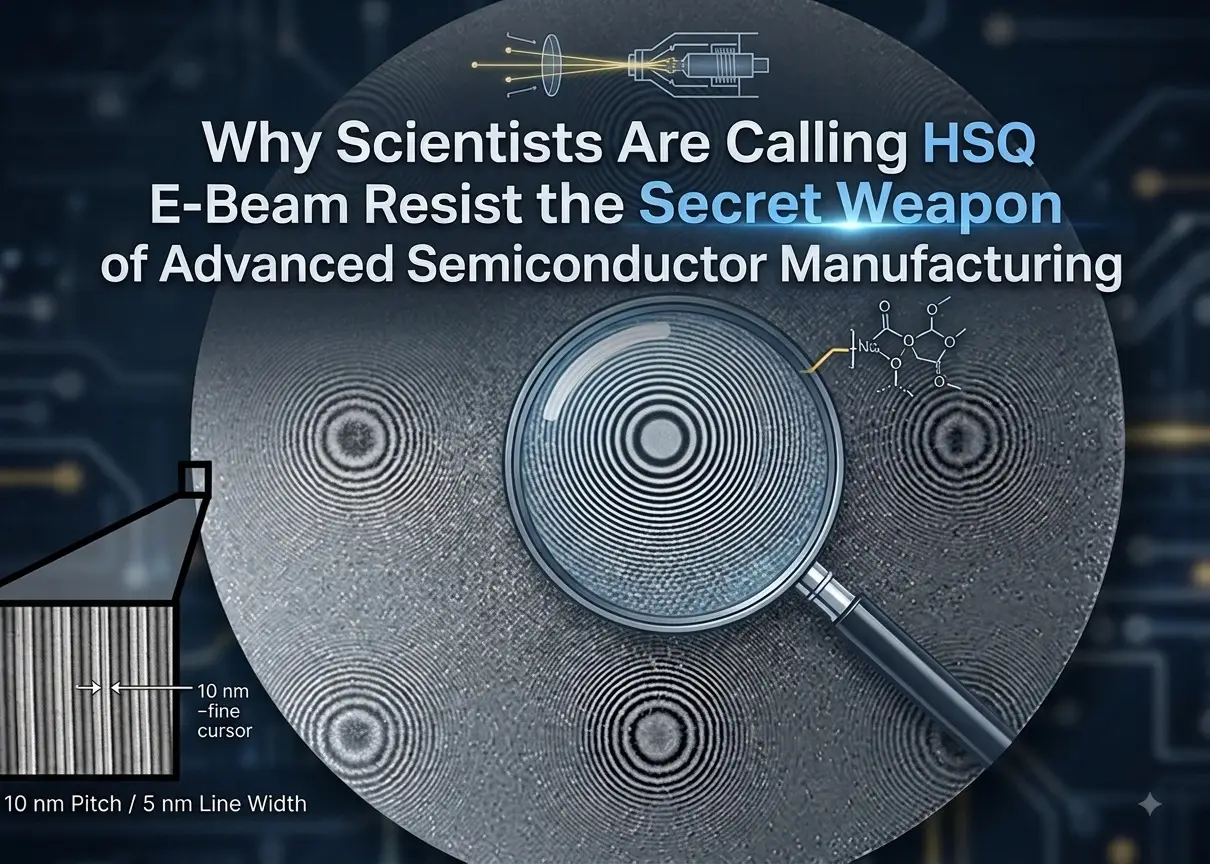
Building smaller computer chips is getting harder every day. As circuit lines shrink down to single nanometer sizes, old plastic-style liquid coatings start to fall over or bend. This common cleanroom problem is called pattern collapse. When tiny lines bend during liquid washing, entire chip designs fail. HSQ resist solves this big hurdle because its core chemical frame contains strong silicon and oxygen atoms. Instead of staying soft like plastic, it turns directly into solid quartz glass under an electron beam.
This fast change from liquid to glass gives chip makers a huge practical edge. Testing supported by the National Institute of Standards and Technology shows that solid silicon glass layers hold up remarkably well against hot plasma sprays. Because the written lines turn into real glass, they stay standing straight and true even at extreme sub-10nm scales. This unique strength helps cleanrooms print super tight line arrays over and over without losing detail.
To keep these tiny lines looking sharp across every wafer, production teams rely on ultra-pure H-SiQ resist formulations from DisChem Inc. Pure chemical batches keep liquid thickness smooth, preventing unexpected flaws during delicate electron-beam printing runs.
Using hydrogen silesquioxane in your cleanroom makes complex microchip work much easier and more reliable. Traditional coatings often need long baking steps and hard chemical stripping processes that can harm delicate chip bases. In contrast, siloxane glass layers stay super tough against heat, harsh liquids, and acid sprays. This natural strength protects your tiny circuits throughout every single step of manufacturing.
Washing away unwanted liquid is also fast and clean with the right developers. Technical reports featured in the IEEE Xplore Digital Library confirm that simple salt developers and basic washing solutions clean away unexposed liquid in seconds. These liquid developers leave behind clean, straight walls without leaving messy bits between fine lines. This means you get crisp, clear microchip shapes every time without scary line bridges.
Best of all, the final glass pattern can often stay right on the wafer as a permanent insulating shield. In modern quantum tools and light-based chips, leaving the glass layer in place saves valuable time. You do not have to scrub or burn off the coating after printing. This clever step cuts chemical waste, saves labor hours, and keeps fragile chip surfaces safe from accidental harm.
Getting perfect results with HSQ resist comes down to three basic steps:
clean wafer prep, smooth spinning, and proper chemical storage. Wafers made of silicon or
glass must be totally clean and dry before applying any liquid. Spinning the wafer at fast
speeds spreads the liquid into an even layer that can be as thin as a few nanometers.
To make sure the thin liquid layer sticks tightly to smooth wafers, process engineers prepare the surface first. Spreading SurPass photoresist adhesion promoter onto the wafer creates a strong invisible grip that holds the coating down tight. Peer-reviewed research in the SPIE Digital Library demonstrates that specialized surface promoters stop tiny printed lines from lifting off during liquid rinse cycles. Combining these easy surface prep steps with reliable cleaning supplies from DisChem Inc. helps cleanrooms achieve top yield on every batch.
Storing your chemical bottles properly is another key to long-term success. Unopened bottles must stay inside a cool cleanroom fridge below 5 degrees Celsius at all times. Cold temperatures keep the liquid fresh and stop it from hardening inside the bottle. This simple habit preserves perfect liquid flow, giving you smooth coatings month after
month.
Hydrogen silesquioxane is the best inorganic material for printing ultra-small microchip lines down below 10 nanometers. By turning into hard silicon dioxide glass under an electron beam, HSQ resist stops line bending, resists harsh plasma, and simplifies daily cleanroom tasks. Combining this liquid with SurPass adhesion promoter guarantees strong bonding, clean wafers, and outstanding chip yield for your laboratory or factory.
DisChem Inc. supplies chip labs with high-grade chemical solutions. From negative resists to custom
adhesion promoters and surface cleaners, DisChem supports every step of your workflow.
1. What is the shelf life of HSQ resist?
When stored in a cleanroom refrigerator below 5 degrees Celsius,
hydrogen silesquioxane maintains its peak quality for up to nine
months. DisChem Inc. delivers freshly made bottles with full usable life. This careful temperature care
guarantees consistent layer thickness and reliable line patterns across all your
microchip manufacturing cycles.
2. Why does hydrogen silesquioxane need cold storage?
Cold storage prevents the liquid coating from hardening inside its bottle before use.
Heat and ambient room air break down the sensitive chemical solution prematurely.
Keeping every bottle cold preserves its smooth liquid state, ensuring that every
applied coating spreads evenly and creates sharp, precise chip patterns in cleanrooms.
3. Which developer liquids give the sharpest pattern lines?
Salty wash solutions and basic liquid developers create the crispest line edges for
negative e-beam coatings. These specialized developers dissolve unexposed liquid
completely while keeping tiny written lines safe. This process leaves smooth,
vertical side walls that allow engineers to print extremely fine sub-10nm shapes
for microelectronics.
4. How does hard glass resist save production costs?
Exposed HSQ resist turns into pure glass and can remain permanently
on chips as a protective insulator. This smart feature saves money by eliminating
extra chemical stripping steps. It shortens production time, cuts down chemical
waste, and keeps delicate underlying circuit layers safe from accidental etching
damage.
5. How can cleanroom labs stop patterns from peeling?
Pattern peeling occurs when liquid coatings fail to grip smooth wafer surfaces tightly. Applying SurPass adhesion promoter before coating builds a strong chemical bridge on silicon or glass. This simple preparation step prevents tiny printed lines from lifting during liquid washing, boosting your overall chip yield.